
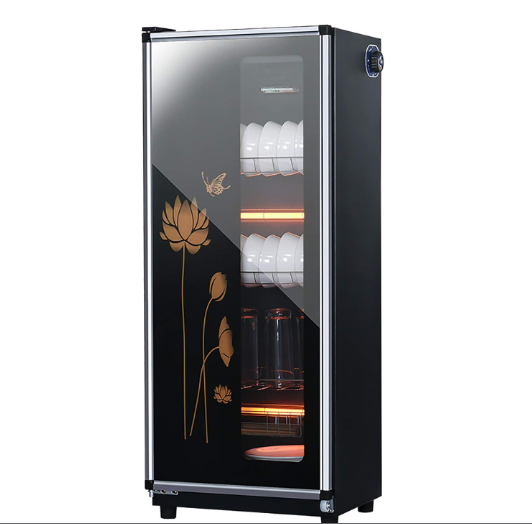
Why We Use Gold-Coated Infrared Bulbs for Precise Heat
If you’re running an automated rotary oven, you know that just cranking up the wattage doesn’t actually give you a uniform surface temperature. Usually, you’re fighting a losing battle with heat loss. That’s where gold-coated infrared bulbs come in. These aren’t just fancy lights. They’re designed to stop heat from escaping where it isn’t needed.
The trick with the gold coating
Think about a standard quartz tube. A lot of that precious energy just leaks out the back of the bulb, wasting power and heating up the oven shell instead of the food. By adding a thin layer of gold to the back, we basically create a mirror. The heat has nowhere to go but forward, right onto your product. It’s fast. Really fast. Your ramp-up time drops and your power bill stays lower. Now, yeah, gold costs more upfront. You’ll see that in the initial bill. But you’re taking the pressure off your power supply, which is a win in the long run.
Getting the electronics to play nice
To make these bulbs work with your kitchen’s PLC, you need a tight loop. We usually lean on PID controllers and high-speed SSRs. The best part? Gold-coated bulbs react almost instantly when you change the voltage. You don’t get that annoying “temperature overshoot” where the heat keeps climbing even after you’ve told it to stop. One quick warning:Watch your wiring. Make sure your wires can handle the specific wattage and voltage, or you’re looking at a burnout. Also, if you’re packing a lot of these bulbs into a small space, things get hot—fast. Check your cooling fans. If the air around the sockets isn’t moving, your connectors will fry.
Making it work in a rotary system
In a rotary oven, your product is always on the move. If the heat isn’t perfectly consistent across the whole length of the tube, you’ll end up with cold spots. That’s a nightmare for quality control. We tweak the length and wattage to match exactly how fast your oven spins. It’s a simple swap for standard halogen tubes, but it gives you much tighter tolerances and faster cycles. It just works better.