Every shift on the blow molding floor, you wrestle with the same quiet thief: preform heating that drifts out of spec. The moment the heating tunnel underperforms, you’re slowing the line, scrapping bottles, and chasing stretch ratios that keep changing. It eats cycles. It eats margin.
What matters, technically
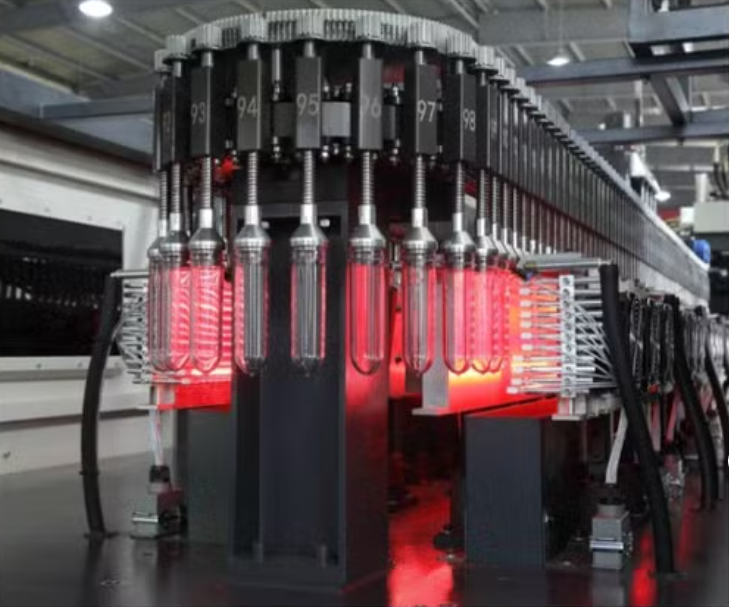
We make industrial infrared lamps for PET ovens that are built around the realities of stretch blow molding. The emitter choice is straightforward: short-wave quartz halogen, chosen because it transfers heat to PET preforms quickly and gives you control. The specs are engineered to OEM standards—R7s connectors, 240V or 230V options, and standard lengths that drop straight into heating tunnels on Sidel, Krones, SIPA, Husky, SACMI, and Nissei ASB machines. Peak wavelengths around 1.0–1.2 microns give you fast response, so PID control can hold tight zone temperatures without overshoot. We design for stable output over long runs, with consistent filament geometry and high-purity quartz that helps prevent hot spots.
Why this approach works in practice
Infrared heating shortens the thermal path: preforms absorb energy directly, so the oven reaches setpoint faster and holds it across the full preform wall. That means fewer temperature-related rejects, better biaxial orientation, and more consistent bottle weight. Faster warm-to-steady behavior also cuts changeover time and reduces the micro-stops that show up when you switch formats. Energy use drops because the emitter heats on demand and stays efficient at high line speeds, instead of dumping heat into idle mass. And lamp life stretches out, so maintenance becomes predictable—less scrambling, more planning.
Things to keep in mind
These lamps are direct-fit for most blow molders, but the condition of oven reflectors, terminal blocks, and wiring still matters. Install with clean contacts and verify voltage at the socket; mismatched voltage stresses the filament and shortens life. Handle quartz with clean gloves to avoid contamination that can cause uneven heating. If your line runs heavy loads of dark or recycled preforms, confirm the spectral output still matches what the material absorbs—some pigments and resins shift the optimal heating curve. Plan replacements during scheduled downtime, and keep a matched set on hand so zone balance stays tight.