Running high-output lines for PC baby bottles, you feel the cost of a weak heat profile immediately. Uneven heating shows up as haze, stress marks, and necks that are just off-spec. Every unplanned stop to swap a heater, retune the tunnel, or chase lamp failures chips away at OEE and stretches the maintenance budget.
What matters, technically
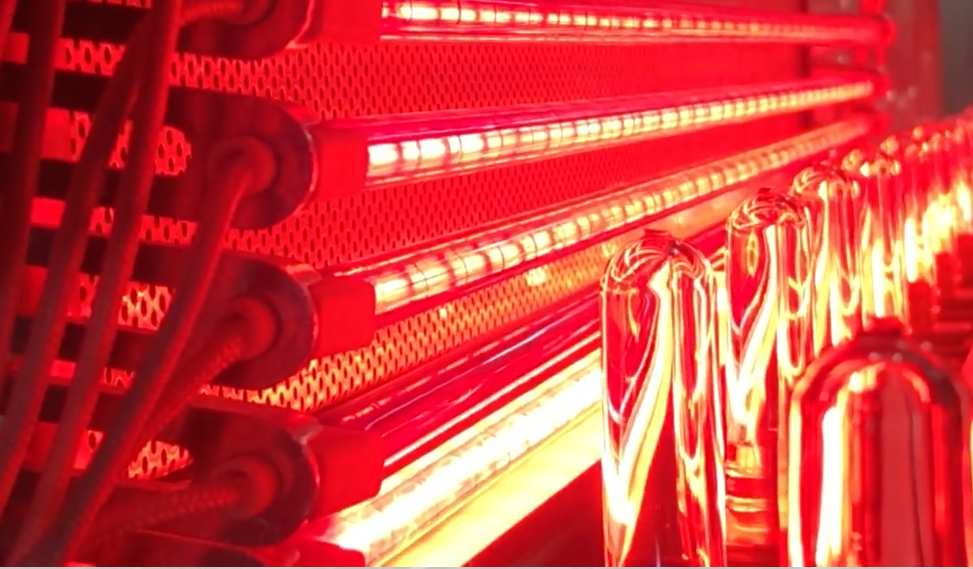
We built the preform heater around short-wave infrared quartz emitters tuned for polycarbonate. They run on 230V, pull power matched to your blow molder’s heating tunnel, and drop into standard R7s sockets. The reflector geometry focuses energy on the preform wall, so the surface hits stretch temperature fast while the core stays stable. Output stays consistent over 5,000+ hours, and the lamps swap in minutes without having to re-calibrate the whole zone.
Why it holds up on real blow molders
On a blow molder, the heater has to keep up with the cycle—every single time. Our emitter layout follows the OEM heating zone spacing, so you get even temperature across the preform without hot spots that burst or thin spots that weaken sidewalls. That means fewer rejects, fewer jams in the blow station, and more bottles per hour. Energy use drops too, because the emitters heat on demand and cool quickly—no more paying to keep idle zones hot.
The details that save you headaches
Installation is straightforward on most blow molders, but the heating tunnel is a harsh environment. Make sure the lamp holders are clean and dry, and verify voltage at the terminal so you don’t cook the lamps prematurely. If your line runs long hours with high ambient heat, plan on reflector inspection and lamp replacement as preventive maintenance.Matching the heater to the machine’s geometry and power specs is what keeps the process stable—and keeps the baby bottle line moving.
Linee ad alta produzione per biberon in PC: si avverte subito il costo di un profilo termico debole. Il riscaldamento irregolare si manifesta con opacità, segni di stress e colli fuori tolleranza. Ogni fermo non programmato per sostituire un riscaldatore, ritarare il tunnel o intervenire su guasti alle lampade riduce l’OEE e allunga il budget di manutenzione.
Aspetti tecnici rilevanti
Abbiamo progettato il riscaldatore per preforme attorno a emettitori a infrarossi a onde corte in quarzo, tarati per policarbonato. Lavorano a 230V, assorbono potenza in linea con il tunnel riscaldante del vostro soffiaggio e si inseriscono in normali portalampade R7s.
La geometria del riflettore concentra l’energia sulla parete della preforma, così la superficie raggiunge rapidamente la temperatura di stiratura mentre il nucleo rimane stabile. La resa rimane costante per oltre 5.000 ore, e la sostituzione delle lampade richiede pochi minuti senza necessità di ricalibrare l’intera zona.
Perché funziona sui soffiatori reali
Sul soffiaggio il riscaldatore deve seguire il ciclo, ogni volta. La disposizione degli emettitori rispetta la spaziatura delle zone riscaldanti OEM, garantendo una temperatura uniforme sulla preforma senza punti caldi che causano rotture né punti sottili che indeboliscono le pareti laterali.
Questo si traduce in meno scarti, meno inceppamenti nella stazione di soffiaggio e più bottiglie prodotte all’ora. Si riduce anche il consumo energetico, poiché gli emettitori riscaldano su richiesta e si raffreddano rapidamente: niente più sprechi per mantenere zone inattive calde.
Dettagli che evitano problemi
L’installazione è semplice sulla maggior parte dei soffiatori, ma il tunnel riscaldante è un ambiente impegnativo. Assicurarsi che i portalampade siano puliti e asciutti, e verificare la tensione al terminale per evitare di danneggiare prematuramente le lampade.
Se la linea opera molte ore con temperature ambientali elevate, prevedere ispezione dei riflettori e sostituzione lampade come manutenzione preventiva. La corrispondenza fra riscaldatore, geometria della macchina e specifiche di potenza è essenziale per mantenere stabile il processo e garantire la continuità della linea biberon.